Your degree is the foundation.Keystone builds the bridge.
Agents read your syllabus, real job ads and your public work, then plan only what your degree doesn't teach yet, with a pod of students to build it with.
Aisha's dashboard, Year 1, BSc CS
38% ready for ML engineer roles
84% by Sep 2027 if she follows her roadmap.
This week: Docker
41%of ML engineer ads ask for Docker, and none of her modules teach it.
Learning, assessment and teaching, joined up around the degree you already have
Learning
A week-by-week roadmap that skips what your modules already teach, with a Why? receipt on every step.
Assessment
Skills count when there's proof: a merged PR, a micro-challenge or a mock interview. Never a self-rating.
Teaching
You teach a pod-mate what you know. Lecturers see anonymous cohort gaps and lab ideas for groups of 10 or more.
How it works
Four steps, each one a page in the demo. Every step has a Why? so you can see the numbers behind it.
Bridge Map
Your syllabus, real job ads and your GitHub on one map. For Aisha: 4 skills proven, 11 covered later by her degree, Docker the biggest gap.
See the Bridge Map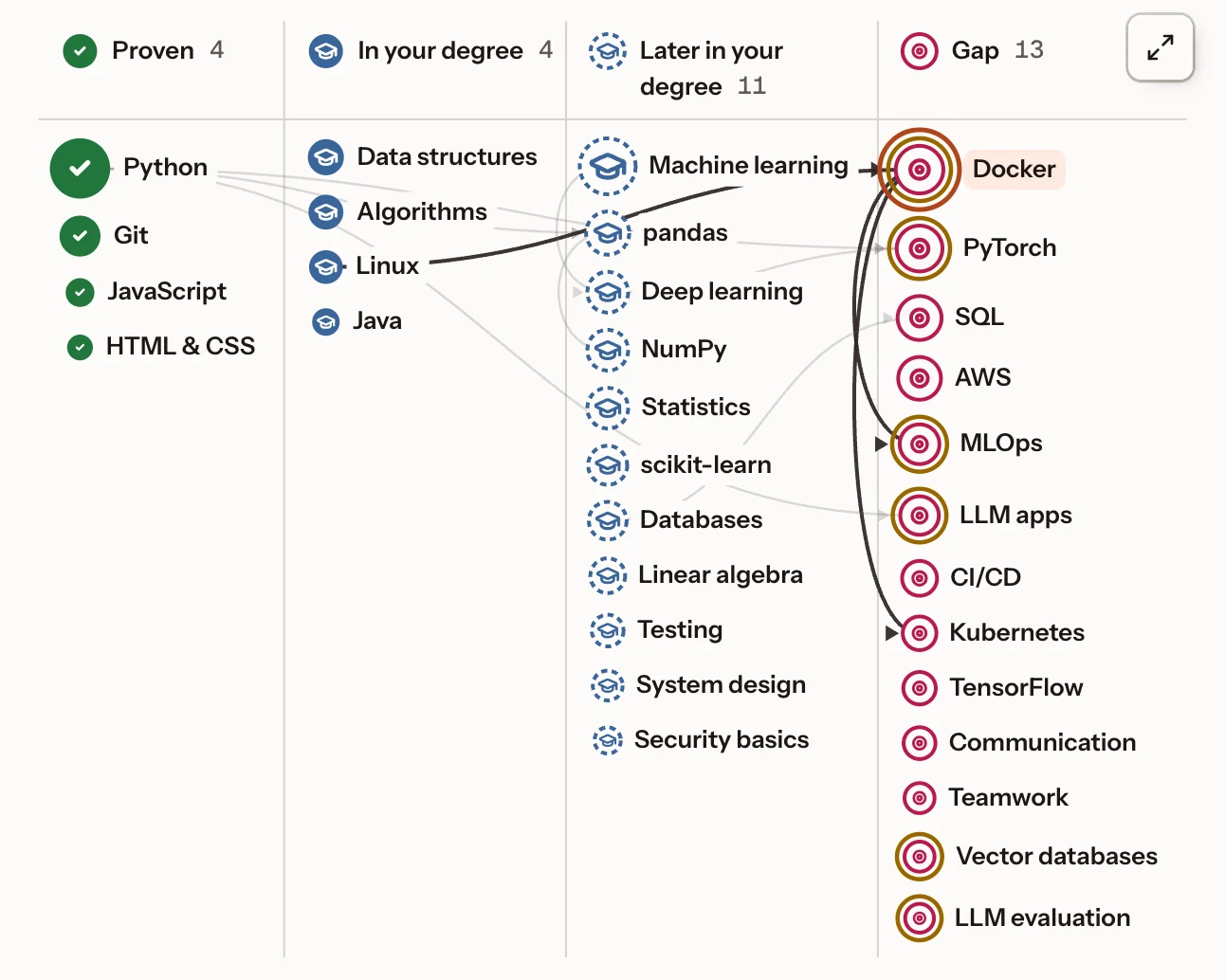
Roadmap
Weeks that build on your modules, skip what they'll teach you anyway, and go lighter in exam weeks.
See the Roadmap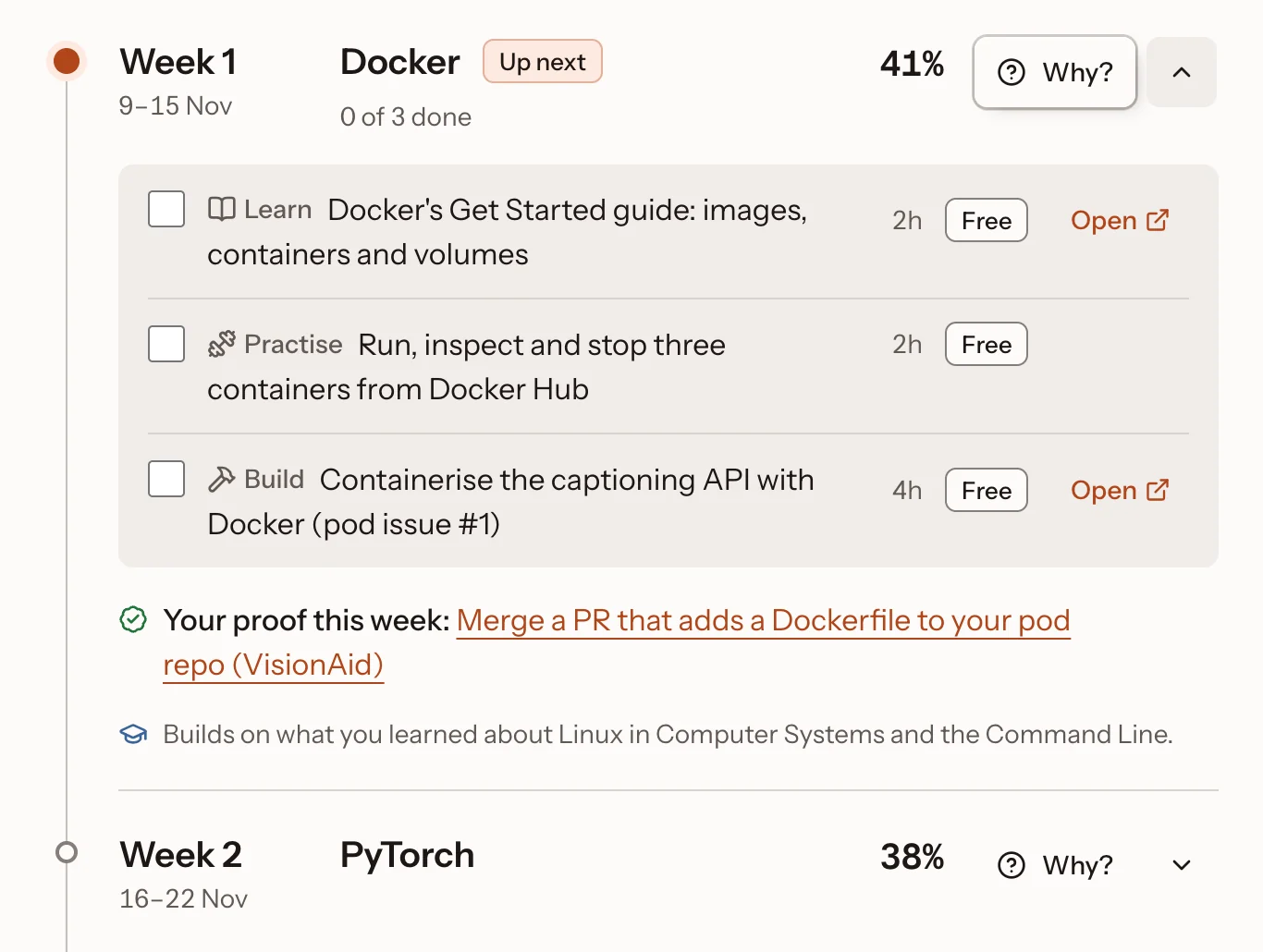
Skipped: Statistics, Linear algebra, Databases and 8 more. Her degree teaches them later. Pod
Two or three students who are strong where you're stuck. Aisha learns Docker from Priya and reviews Mei's Python.
See the Pod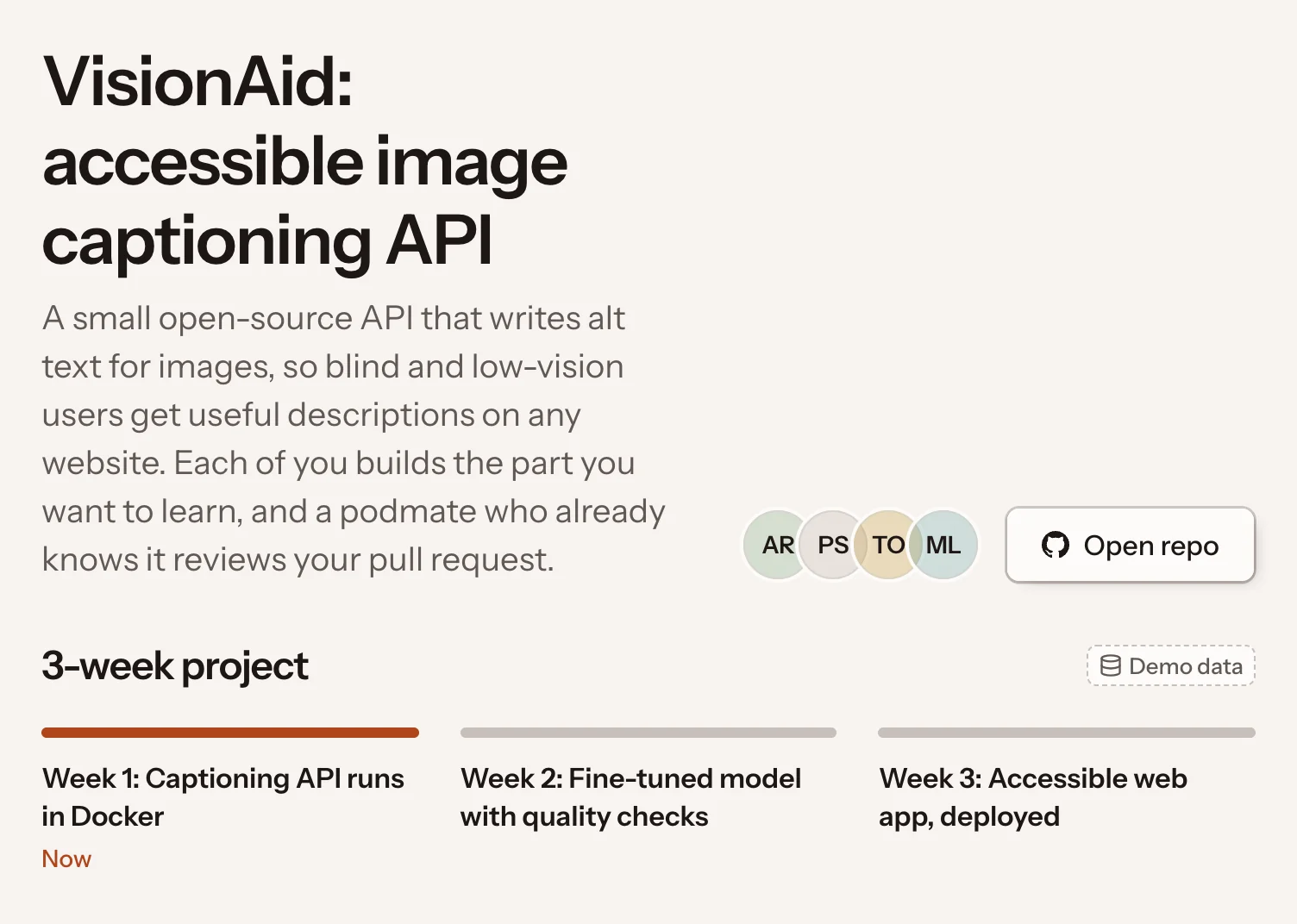
Pod Orbit: Priya reviews her Docker PR, and she reviews Mei's Python. Proof
A real GitHub project. When a teammate approves your PR, the skill moves up your Skill Passport.
See the Skill Passport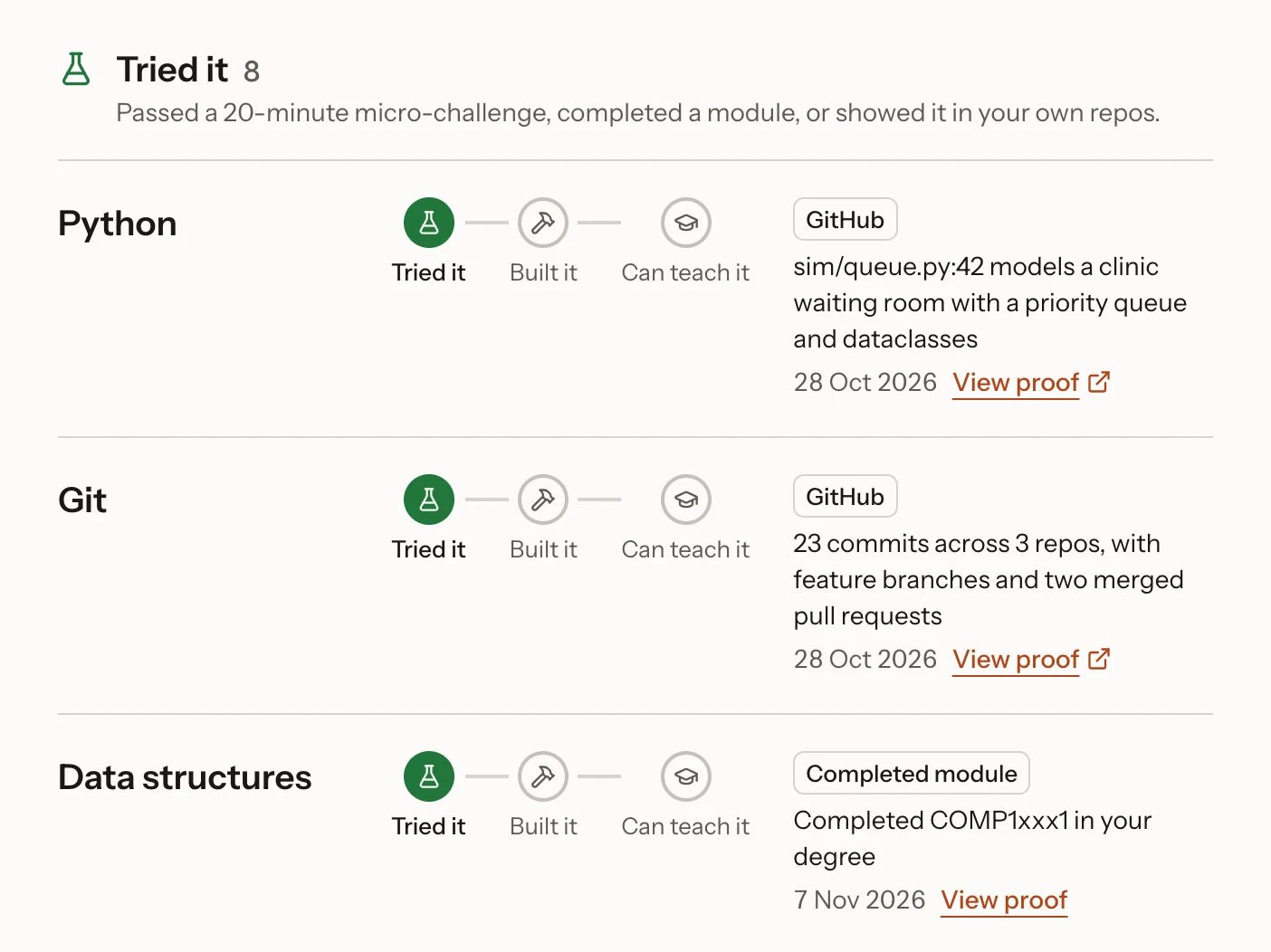
Proof climbs a ladder
Keystone turns what you're taught into what you can prove. Each skill on your passport sits on one rung, and only real work moves it up.
Tried it
You finished a micro-challenge
Built it
A pod-mate approved your merged PR
Can teach it
You reviewed someone else's work in it
Questions students ask first
- Does Keystone grade me?
- No. Agents propose and you decide. A skill counts only when there's proof you chose to share, and every recommendation explains where it came from.
- What does it read?
- Your programme's public syllabus, job ads, and public work you link, like your GitHub. Nothing is posted anywhere on your behalf.
- How are pods matched?
- On skills, interests and availability. Never on personal characteristics. Badges like New to UoM are optional and only send help your way.
Built for Reply's AI on Campus
Specialist agents hand work to each other, one knowledge graph joins modules, job ads and people, and Bridge Week takes it to campus.